


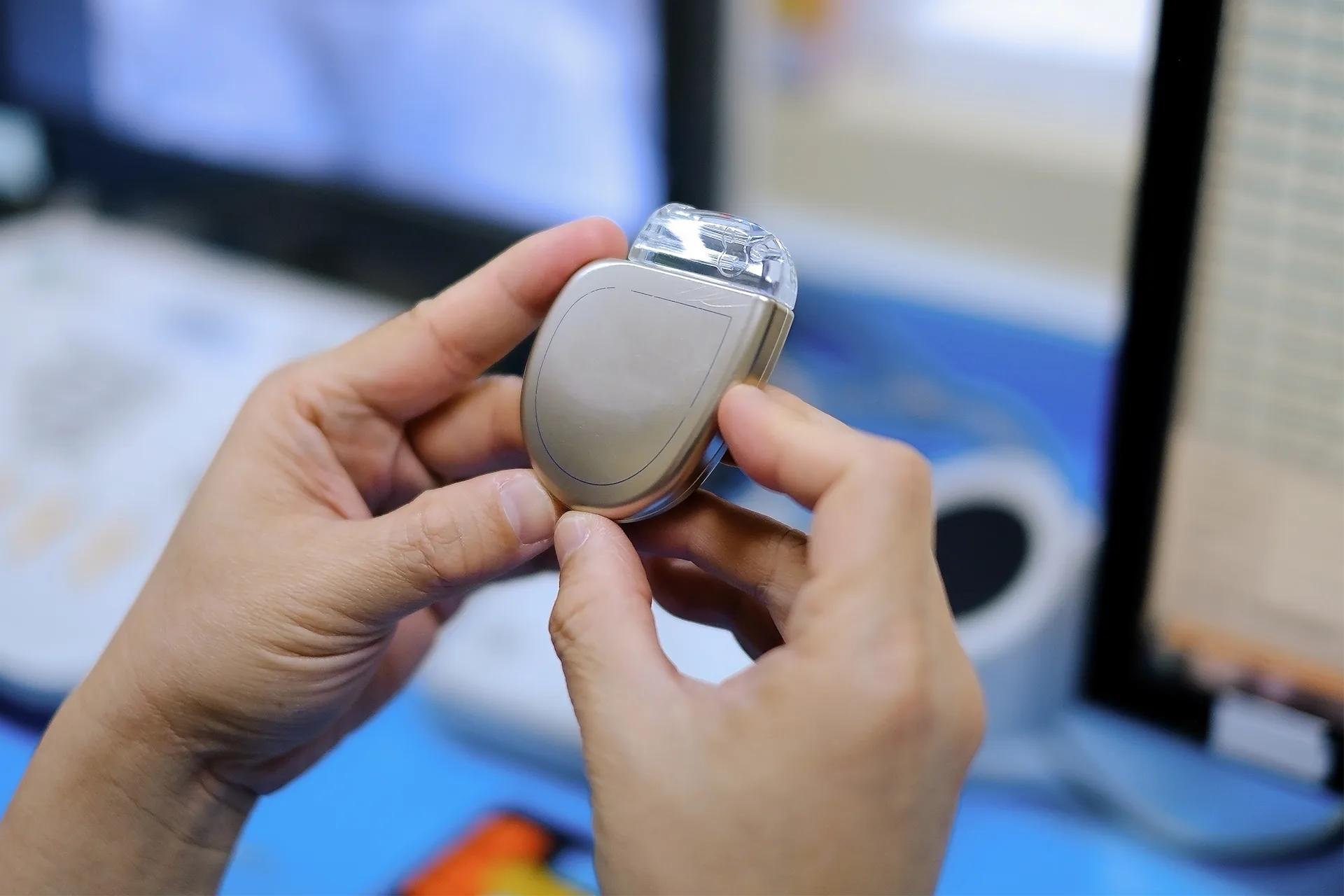
The proliferation of “smart” cardiac implants — featuring integrated sensors, miniaturized power sources, and active communication — has brought significant change to the MedTech regulatory landscape. While traditional stents and valves primarily required mechanical durability, today’s connected implants introduce a potentially volatile cocktail of polymers, adhesives, and electronics.1 These components must remain stable and biocompatible for years while maintaining hermetic integrity in a high-pressure, blood-contact environment.2
For R&D and regulatory leaders, the main hurdle to a successful regulatory submission is managing the chemical characterization of these multi-material stacks.3
Why Smart Devices Outpace Standard Medical Device Testing Services
Standard testing models often fall short when applied to smart devices. In an energy-dependent implant, factors like battery heat, electrical pulses, and continuous sensor activation create a dynamic environment. These active factors can accelerate material degradation and alter leaching kinetics, potentially triggering unforeseen interactions between polymers and metals that simple tests might miss.1
At Jordi Labs, an RQM+ company, we treat medical device testing services as a forensic investigation. We emphasize a robust feasibility step before formal testing begins. This stage is essential for complex devices involving polyurethanes and intricate material stacks, as it identifies potential degradation risks under exaggerated chemical conditions.4 By addressing these risks early, we help our clients prevent the downstream analytical issues that often lead to regulatory delays. Early feasibility testing also reduces timeline risks by revealing material issues before formal studies begin, avoiding costly rework at submission stages.
The Material Complexity Multiplier
Smart implants contain diverse materials, including silicones, fluoropolymers, and hybrid coatings, each with unique stabilizers. When these materials are layered, they don’t just exist in a siloed manner side by side; they interact. The complexity arises from multiple manufacturing steps, supplier variability, and entire material stacks, all of which impact regulatory defensibility.
- Interface integrity: Specialized coatings over electronic components can crack due to thermal expansion or residual solvent interaction at the interface
- Active leaching: Localized heat from a battery housing can cause plasticizer migration or antioxidant depletion;3,4 this can release compounds that are never detected in standard, room-temperature extractions
Solving the “Unknown Identification” Crisis in High-Risk Implants
The FDA and notified bodies have significantly raised expectations for unknown identification.3,5 In a high-risk cardiac implant, reporting a “total extractables” figure is no longer sufficient for a successful toxicological risk assessment. Regulators expect every detectable peak to be identified to a high degree of scientific certainty to ensure patient safety.5
If a lab report contains numerous “unknowns,” it invites a clinical hold or a major deficiency letter. Our approach emphasizes resolving these peaks through high-resolution mass spectrometry and our proprietary Lumo™ predictive modeling. We use analytical methods that identify unknown chemicals rather than just reporting totals, supporting robust regulatory narratives that link chemical characterization findings to biological risk.
The Power of Lumo™ Predictive Modeling
By utilizing predictive response factors, we reduce the uncertainty that typically complicates the risk assessment process. Rather than applying massive uncertainty factors that can make a safe device look dangerous on paper, we provide more accurate quantification. This allows toxicologists to build a defensible safety case based on real data, ensuring a smoother path through the regulatory submission process.
Strategic Extraction: Sealed Packages and Surgical Precision
A common technical question we address is how to test a sealed electronics package without creating “data noise.” Extracting a full device that contains circuit boards leads to false positives because the process flags materials like copper or lead from internal electronics that will never touch the patient.3
Our material characterization services focus on surgical precision:
- Selective extraction: We focus exclusively on patient-contacting materials and justified “indirect” contact points
- Scientific rationale: We provide detailed justification to regulators explaining why sealed, non-contacting components were excluded from the study;5 this strategy avoids the “rejection by 1,000 questions” that often stalls a submission
- Analytical fingerprinting: We trace any biocompatibility failures back to specific manufacturing aids, cleaning residues, or supplier-specific polymers
Tracing Failures With Material Science Testing
Recalls in the smart cardiac space rarely stem from expected materials. They originate from the “unexpected” — degradation products or impurities hidden within the supply chain. Emerging materials like conductive or thermosensitive polymers often lack historical toxicological benchmarks, making their characterization even more vital.3 These novel materials often behave differently under energy-dependent pathways, complicating traditional extractable and leachable methods and requiring labs to adapt analytical techniques rather than forcing new materials into outdated frameworks.
When a device fails biocompatibility, our failure analysis team of polymer chemists conducts a root-cause investigation. By using advanced material science testing, we employ chemical fingerprinting to trace a failure to a specific batch of raw material or a subtle change in a supplier’s process. This investigative rigor differentiates a medical device testing laboratory that checks boxes from a partner that solves problems and ensures your device reaches the market.
Conclusion: Building for Performance, Not Just Compliance
The most underestimated risk in MedTech is the long-term interaction of multiple materials in energy-dependent implants, such as pulse generators.1 The combination of polymers, metals, coatings, and electronics creates complex aging pathways that can alter device safety and function over time.3 By integrating these considerations into your early feasibility steps, you identify risks before they become submission-ending failures.
As MedTech services continue to evolve toward smarter, more complex devices, your choice of lab partner determines your speed to market. RQM+ and Jordi Labs provide the investigative science needed to turn chemical characterization complexity into regulatory clarity.
References
1 Crawford, M. (2025). What’s Next for Smart Implants in Health Care? Journal of Medical Internet Research, 27, e87975. https://doi.org/10.2196/87975
2 European Commission. (2017). Regulation (EU) 2017/745 of the European Parliament and of the Council on medical devices. https://eur-lex.europa.eu/legal-content/EN/TXT/?uri=CELEX%3A32017R0745
3 International Organization for Standardization. (2020). ISO 10993-18:2020 Biological evaluation of medical devices — Part 18: Chemical characterization of medical device materials within a risk management process. https://www.iso.org/standard/64750.html
4 Association for the Advancement of Medical Instrumentation. (2021). AAMI TIR58:2014/(R)2021, Chemical characterization of medical device materials – Guidance for ISO 10993-18. https://www.aami.org/standards
5 U.S. Food and Drug Administration. (2023). Use of International Standard ISO 10993-1, “Biological evaluation of medical devices – Part 1: Evaluation and testing within a risk management process.” https://www.fda.gov/regulatory-information/search-fda-guidance-documents/use-international-standard-iso-10993-1-biological-evaluation-medical-devices-part-1-evaluation-and
